










Qatar Taxi MDVR with GPS
Qatar Taxi Mobile DVR with GPS
Qatar is continuously strengthening the supervision of taxis, limousine services, and commercial passenger vehicles. Recent inspection priorities include enterprise operating licenses, vehicle compliance, driver qualifications, safety configurations, and service quality. According to the planning data currently released by Qatar's transportation department, there are approximately 4,000 traditional Karwa taxis operating nationwide. If limousines, ride-hailing passenger vehicles, and buses are included, the scale of commercial vehicles requiring digital supervision is even larger.
hnweb_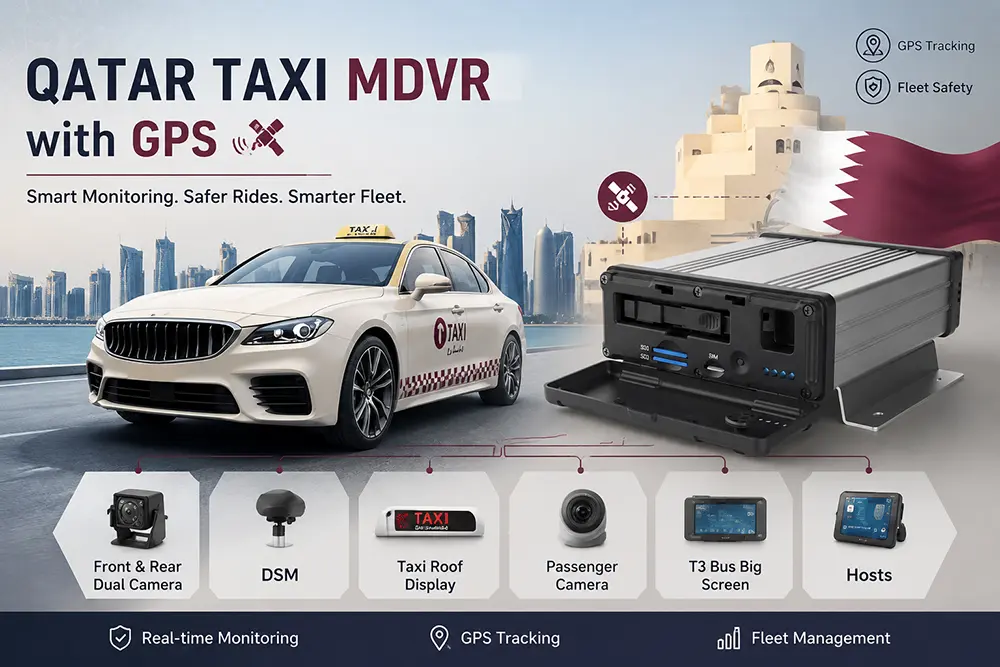
Under this trend, Qatar taxi, limousine, and bus operators are paying increasing attention to three types of technologies:
GPS Vehicle Positioning
DVR In-vehicle Video Recording
Backend Centralized Monitoring
Compared to installing a standalone GPS, an MDVR system with GPS can not only display the vehicle's position but also synchronously record videos inside and outside the vehicle, driving status, and alarm information.
Why Do Taxis Need GPS + MDVR?
Traditional GPS mainly solves the problem of "where the vehicle is," but it cannot restore the accident scene, driver behavior, and in-vehicle situations.
MDVR, namely Mobile Digital Video Recorder, can connect to cameras at the front, inside, rear, and both sides of the vehicle. The recording can synchronously overlay the time, GPS location, driving speed, and alarm information.
When GPS, MDVR, and the backend platform are combined, fleet managers can:
View real-time vehicle locations
Remotely retrieve videos inside and outside the vehicle
Query historical trajectories and video recordings
Handle passenger complaints and driver-passenger disputes
Verify accident details
Receive abnormal driving alarms
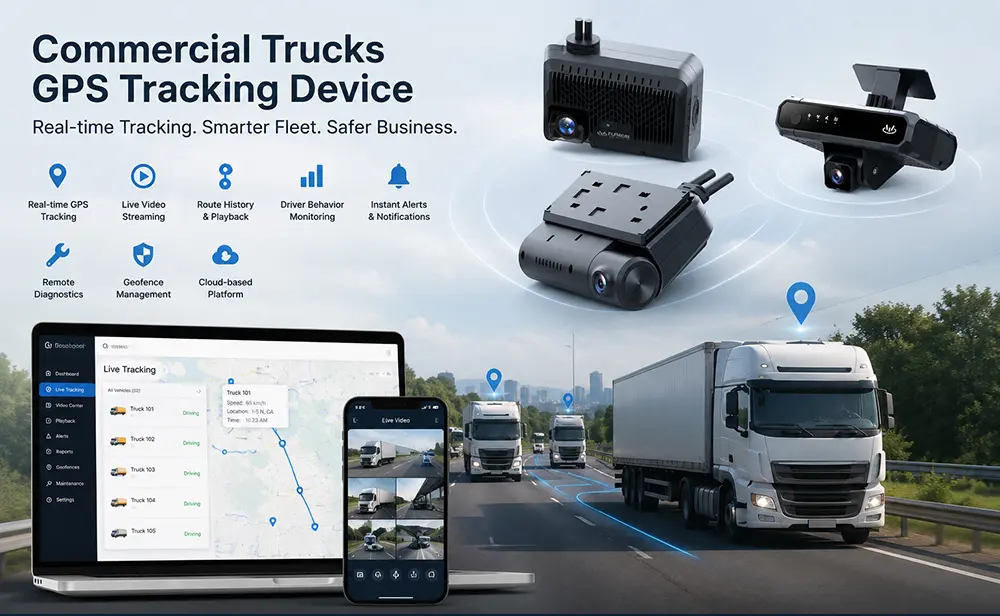
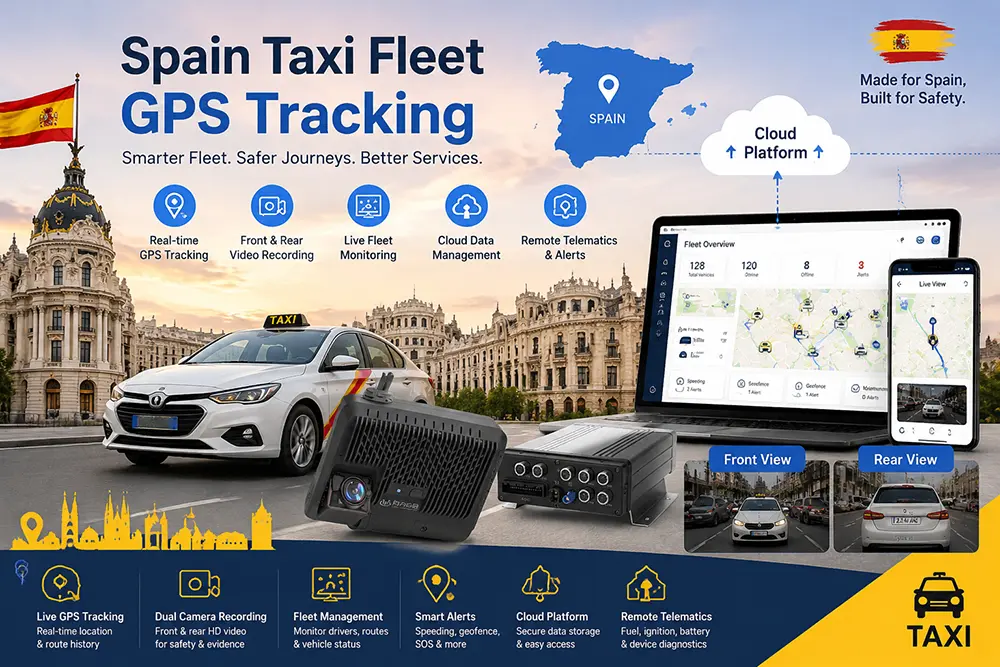
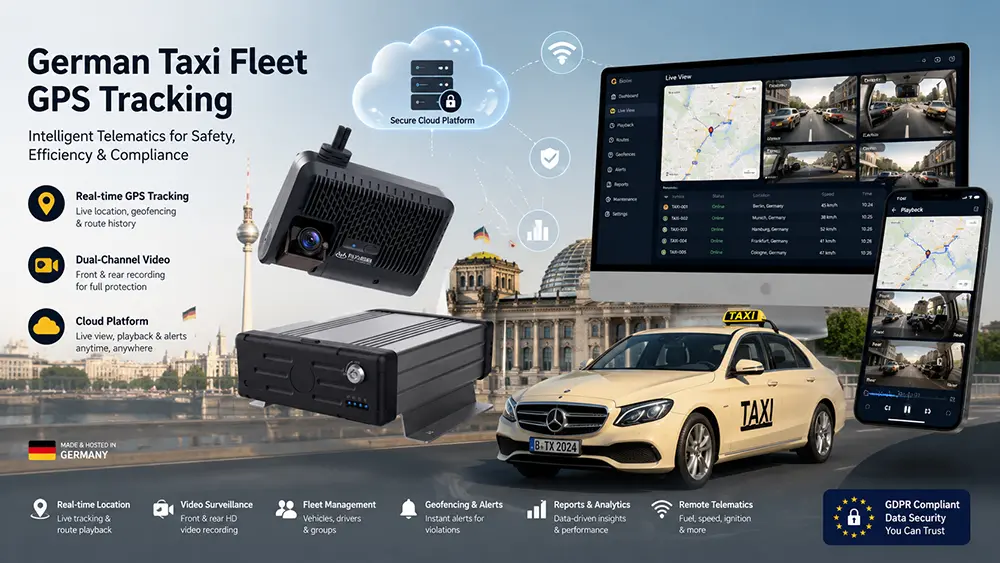
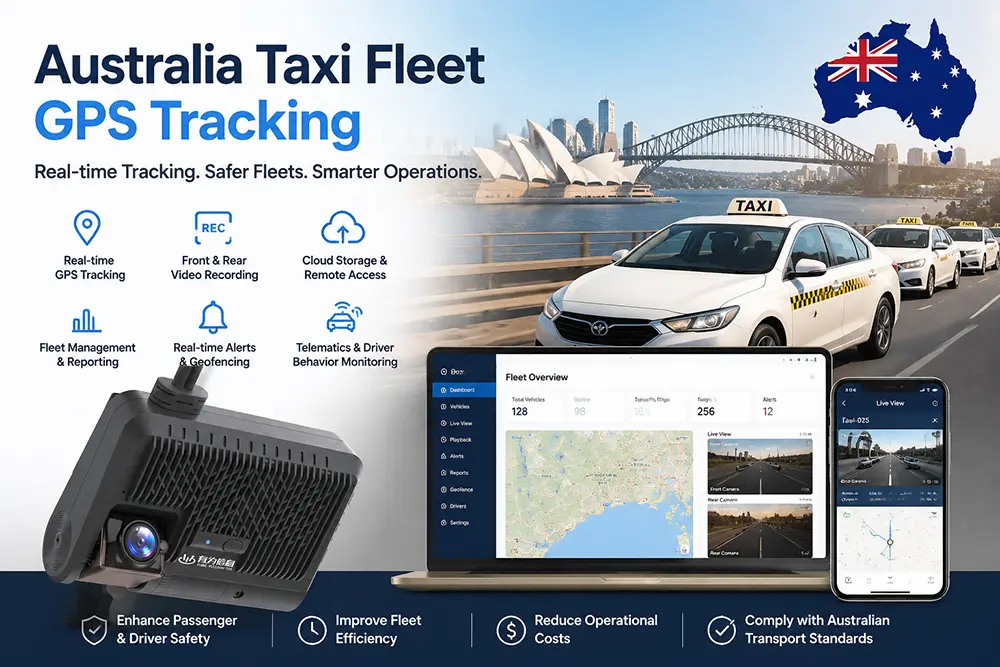
The YUWEI taxi fleet solution integrates GPS positioning, 4G/5G communication, video monitoring, AI early warning, and backend management. It can achieve vehicle positioning, real-time video, trajectory playback, alarm upload, and operation statistics.
Main Hardware Components of the System
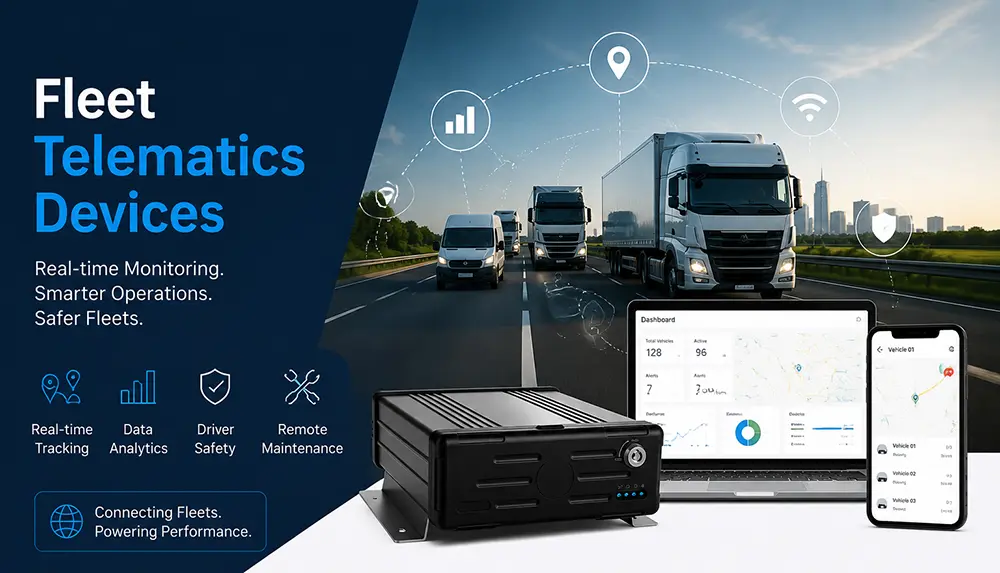
1. GPS In-vehicle MDVR
The MDVR is the core device of the entire monitoring system.
The device can connect to 4-channel, 6-channel, or 8-channel cameras and save the recordings on a hard drive or memory card. Through the 4G network, the platform can remotely view real-time videos, alarm clips, and vehicle locations.
Main functions include:
GPS/BDS positioning
Multi-channel video recording
4G remote transmission
Real-time video viewing
Historical video playback
Alarm image and video upload
Hard drive or SD card loop storage
2. Fleet Dash Cam
For regular taxis and limousines, integrated fleet dash cams can also be used.
Compared with ordinary consumer-grade dash cams, fleet dash cams pay more attention to GPS positioning, backend connection, remote recording, and driving behavior management.
The YUWEI fleet dash cam supports built-in GPS/BDS, 4G communication, forward recording, and external cameras, which can meet the basic monitoring needs of small taxi fleets.
3. ADAS Forward-facing Camera
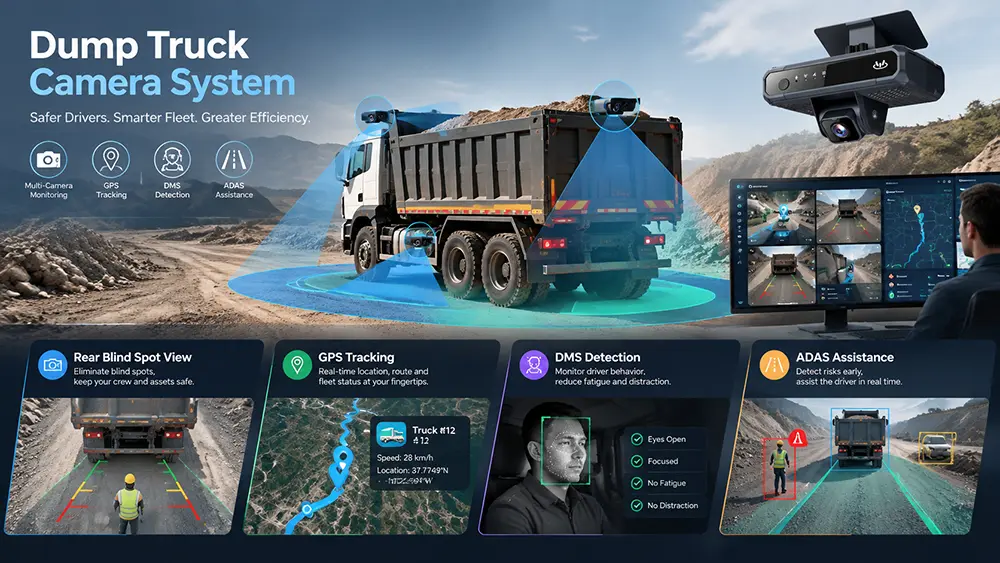
The ADAS camera primarily monitors the road ahead of the vehicle.
The system can recognize front vehicles, lane lines, pedestrians, and potential collision risks, and issue reminders to the driver.
Common early warnings include:
Forward Collision Warning (FCW)
Headway Monitoring and Warning (HMW) / Too Close Distance Warning
Lane Departure Warning (LDW)
Pedestrian Collision Warning (PCW)
4. DSM Driver Status Camera
The DSM camera is primarily used to monitor the driver's status.
The system can identify behaviors such as fatigue, closed eyes, yawning, smoking, mobile phone usage, and distraction. Once a risk is detected, the device will issue a voice reminder and upload the alarm information to the backend.
For fleets operating at night, driving for long hours, or operating in shifts, DSM can help enterprises discover driving risks in advance.
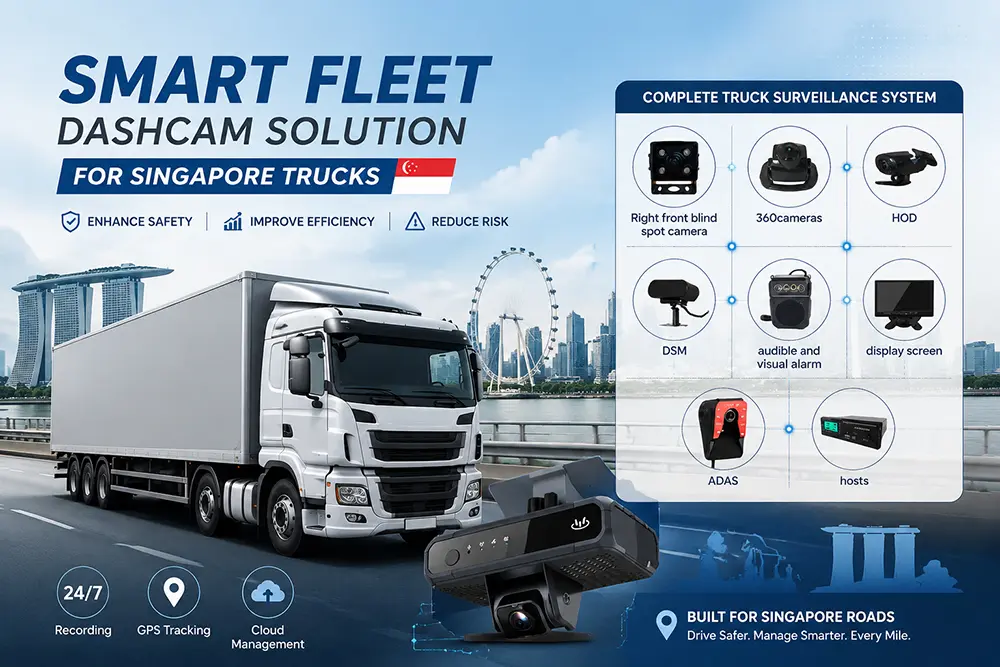
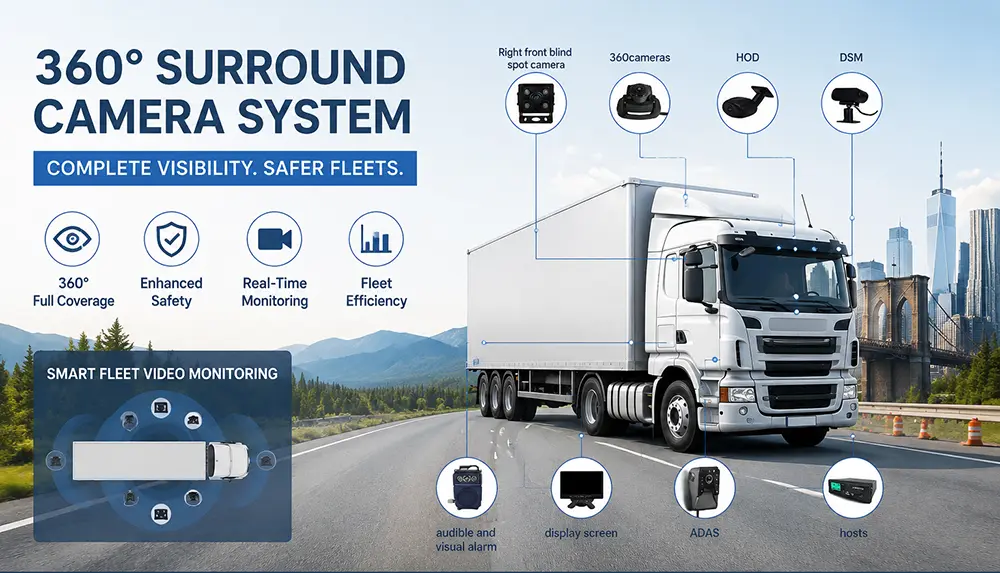
5. HOD and Multi-angle Cameras
The HOD (Hands Off Detection) camera can detect behaviors such as the driver's hands leaving the steering wheel, using a mobile phone, and not wearing a seatbelt.
Fleets can also add rear, side, blind spot, or 360° cameras to expand the vehicle's monitoring coverage.
Different vehicles can adopt different configurations:
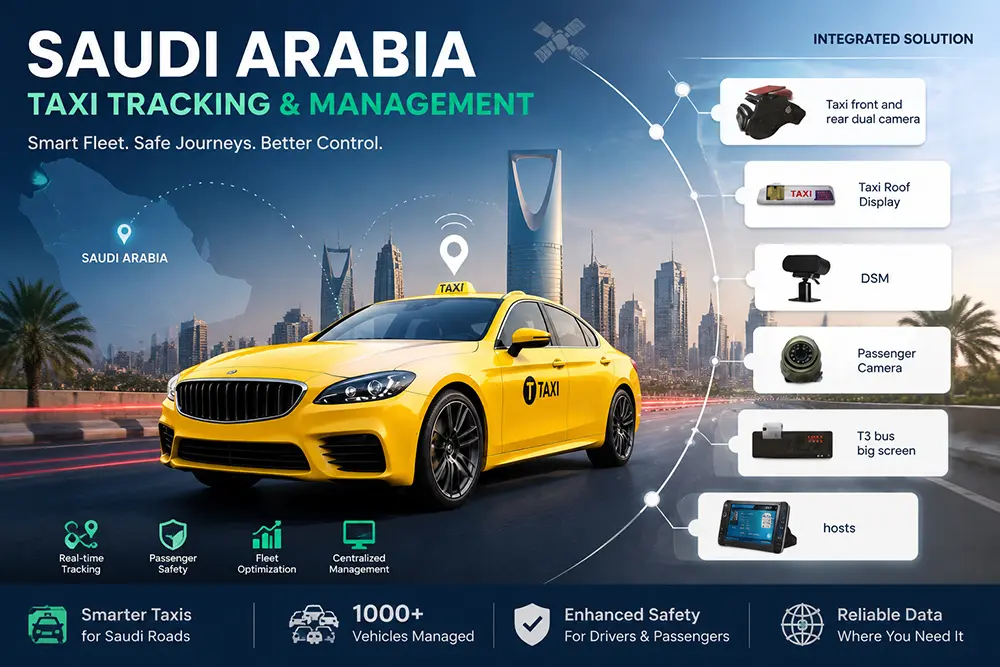
Taxis: Front, driver, cabin, and rear
Limousines: Front, driver, and passenger cabin
Buses: Front, driver, door, aisle, sides, and rear
6. In-vehicle Display Screen
The in-vehicle display screen can be used to show routes, fares, trip information, and safety prompts.
The display screen can also connect to rearview or blind spot cameras to help drivers check the surroundings of the vehicle. Meanwhile, taxi operators can also publish passenger notices or in-vehicle service information through the display screen.
Backend Monitoring Platform Functions
Only when GPS, MDVR, and AI cameras are connected to the backend can a complete fleet management system be formed.
Real-time Positioning
Managers can view vehicle locations, speeds, directions, and online status on an electronic map.
Real-time Video
By clicking on a vehicle on the map, managers can view feeds from the front, driver, cabin, and other cameras.
Trajectory and Video Playback
The platform can query historical trajectories by vehicle, time, or area, and synchronously play the corresponding video recordings.
Geofencing
Operators can set up geofences for airports, hotels, stations, commercial districts, or restricted areas. When a vehicle enters or leaves a designated area, the platform will automatically trigger an alarm.
Emergency Alarm
After the driver presses the emergency button, the platform can immediately receive the vehicle's location, alarm type, and live video.
AI Driving Behavior Management
Alarms generated by ADAS, DSM, and HOD can be uniformly uploaded to the backend, including:
Fatigue driving
Distracted driving
Mobile phone usage
Lane departure
Tailgating (Following too closely)
Not wearing a seatbelt
Hands off the steering wheel
Operation Reports
The platform can generate statistics on vehicle mileage, running time, number of alarms, route records, and vehicle utilization rates, providing a basis for scheduling and safety training.
Configuration Recommendations for Different Vehicles
Regular Taxis
It is recommended to use a 4-channel MDVR or a fleet dash cam, paired with:
Front camera
Driver camera
Cabin camera
Rear camera
Emergency alarm button
This solution can meet the needs for positioning, video recording, remote viewing, and driving safety management.
Limousine Services
Limousines can add high-definition in-vehicle cameras, DSM, and in-vehicle display screens.
Equipment installation should be as concealed and neat as possible to avoid affecting the vehicle interior and ride experience.
Commercial Buses
Buses are recommended to use a 6-channel or 8-channel MDVR, covering:
Front of the vehicle
Driver area
Boarding and alighting doors
Cabin aisle
Both sides of the vehicle
Rear of the vehicle
Blind spot monitoring, geofencing, and passenger counting functions can also be added.
Reasons Why the Solution Fits the Qatar Market
Qatar's taxis and limousines are mainly concentrated in the Doha urban area, Hamad International Airport, hotels, shopping malls, and exhibition areas.
During peak passenger flow or large-scale events, it is difficult to grasp the vehicle distribution in a timely manner by relying solely on phone calls and manual dispatching.
GPS + MDVR + Backend Platform can help operators:
Reduce empty runs
Improve dispatch efficiency
Grasp real-time vehicle status
Save evidence for accidents and complaints
Identify high-risk driving behaviors
Enhance fleet service quality
Therefore, the upgrade of Qatar's commercial vehicles should not just be about installing a video recording device, but establishing a complete intelligent fleet management closed loop:
GPS Real-time Positioning → MDVR Multi-channel Recording → AI Driving Early Warning → 4G Data Upload → Backend Centralized Management → Abnormal Event Handling
As Qatar continues to strengthen the supervision of passenger transport enterprises, safety, and service quality, taxi, limousine, and bus operators require a more transparent and traceable fleet management system.
An MDVR with GPS plus a backend monitoring platform can uniformly manage vehicle locations, video recordings, driver status, alarm events, and operational data.
Operators can also flexibly configure Dash Cams, MDVRs, ADAS, DSM, HOD, 360° cameras, and in-vehicle display screens according to vehicle types, building an integrated fleet platform covering safety, dispatching, evidence collection, and operational analysis.
Email:hello@yuweitek.com